Peugeot
301
301 / 72–116 PS
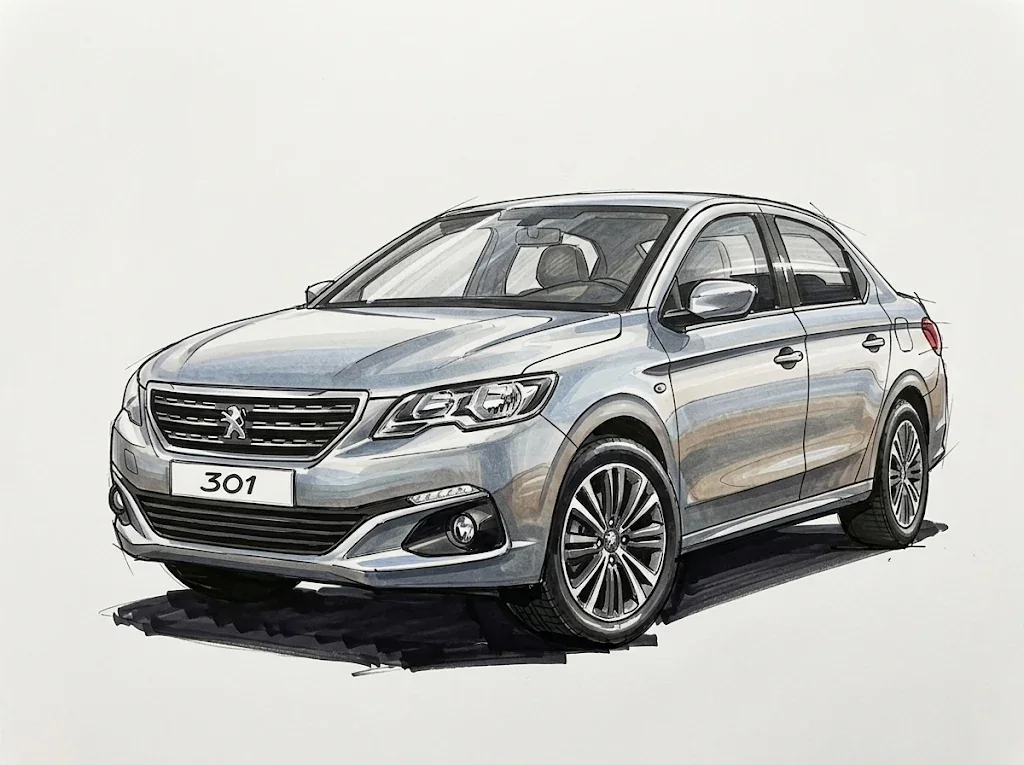
- Production
- 2012–2021
- Body
- Sedan, 4-door
- Segment
- B
- Built in
- Vigo (Spain) and other countries
Dimensions and capacity
- Length
- 4,442 mm
- Width
- 1,748 mm
- Height
- 1,446 mm
- Wheelbase
- 2,655 mm
- Boot
- —
- Kerb weight
- 1,055–1,165 kg
Engines
Engine options vary by market and model year.
| Engine | Fuel | Displacement | Power | Torque | Gearbox |
|---|---|---|---|---|---|
| 1.2 VTi | Petrol | — | 72 PS | — | — |
| 1.2 PureTech | Petrol | — | 82 PS | — | — |
| 1.6 VTi | Petrol | — | 116 PS | — | Manual / 4-speed automatic |
| 1.6 HDi | Diesel | — | 92 PS | — | 5-speed manual |
| 1.6 BlueHDi | Diesel | — | 100 PS | — | 5-speed manual |
Fuel consumption
No fuel consumption data for this car yet.
Who is it for?
Suggestions derived from the car's dimensions, body and engines.
High-mileage drivers
The diesel option keeps motorway fuel use low.
Used-car buyers
This generation is now only available used.
Known problems
No problem summary for this car yet.
Short history
The Peugeot 301 was unveiled at the 2012 Paris Motor Show and went on sale in Turkey in November 2012.
It was designed for emerging markets and built in Vigo alongside its twin, the Citroën C-Elysée. It was Peugeot's first model with an x01 name.
It was facelifted in 2017.
Sources (1)
Specs and history
The data on this page was compiled from the sources above and is being checked. Blank fields were left blank because the sources weren't clear.